
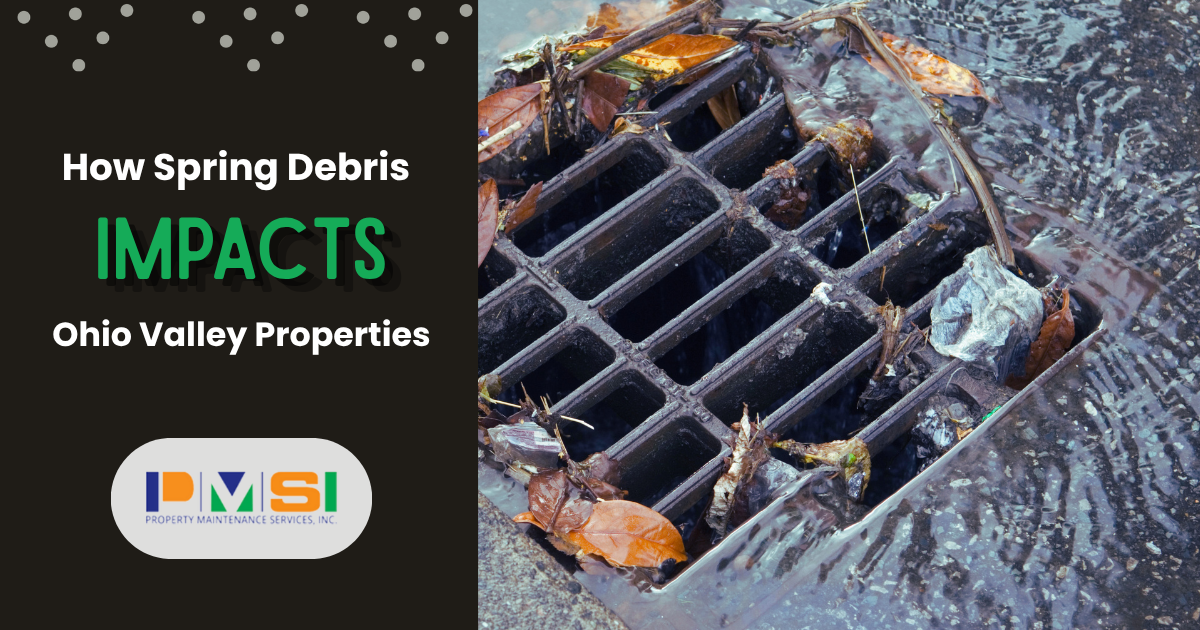
Spring rain and debris can create serious maintenance issues for Ohio Valley properties, especially when paved surfaces are left untreated after winter. Roads, parking lots, and public spaces often collect mud, gravel, leaves, litter, and other debris that can quickly build up during the spring season.
In the Ohio Valley, frequent rain, flooding, saturated ground, and runoff make these problems even more noticeable. As debris shifts toward curbs, drains, and low spots, properties can experience drainage issues, messy surfaces, and a more difficult cleanup process.
Spring Rain Moves Debris Quickly Across Paved Surfaces
Spring weather has a way of turning small debris into larger maintenance concerns. What begins as loose gravel, dirt, or leftover winter material can quickly move across roads and parking lots once rain begins to fall.
Water pushes debris toward curbs, storm drains, road edges, and parking lot entrances. As that material builds up, surfaces become harder to maintain and drainage systems have to work harder.
This is one of the main reasons spring property maintenance matters so much in the Ohio Valley.
Debris Buildup Creates Drainage Problems
One of the biggest concerns during the spring season is how debris affects drainage. Mud, leaves, litter, and sediment often collect near inlets and low-lying areas where water is meant to move freely.
When that buildup is left alone, drainage problems can become more noticeable after each storm. Standing water, clogged inlets, and runoff issues often begin with surface debris that was never removed.
Keeping paved surfaces clear helps support better water flow and reduces the chance of drainage-related buildup.
Townships Face Spring Roadway Mess After Winter
Townships often deal with the effects of winter long after the season ends. By spring, paved roads may still hold loose stone, dirt, branches, and debris along the edges.
As rain moves through the area, those materials shift and spread. Roads can begin to look neglected, and the overall condition of the surface becomes harder to manage.
For townships, spring cleanup helps improve roadway appearance, reduce buildup near drainage paths, and create a cleaner start to the season.
Municipalities Benefit from Cleaner Streets in the Spring
Municipalities have to manage a wide range of paved public spaces. Streets, curbs, downtown areas, and community roadways all collect debris throughout the winter and early spring months.
Once rainfall becomes more frequent, that buildup starts moving into visible public areas. This can affect both presentation and function.
Cleaner streets help municipalities maintain a more polished appearance while also reducing loose debris near drainage areas and traffic zones.
Parking Lots Collect Mud, Trash, and Sediment Fast
Parking lots often show the effects of spring debris before many other surfaces. Rain pushes mud, litter, leaves, and gravel into traffic lanes, curbs, and drain areas, creating a messy and poorly maintained appearance.
For commercial properties, this can affect curb appeal and create frustration for customers, tenants, and employees. The longer debris remains in place, the more difficult it becomes to manage after repeated storms.
Maintaining cleaner parking lots in the spring helps support both property appearance and overall function.
Street Sweeping Helps Reduce Spring Surface Buildup
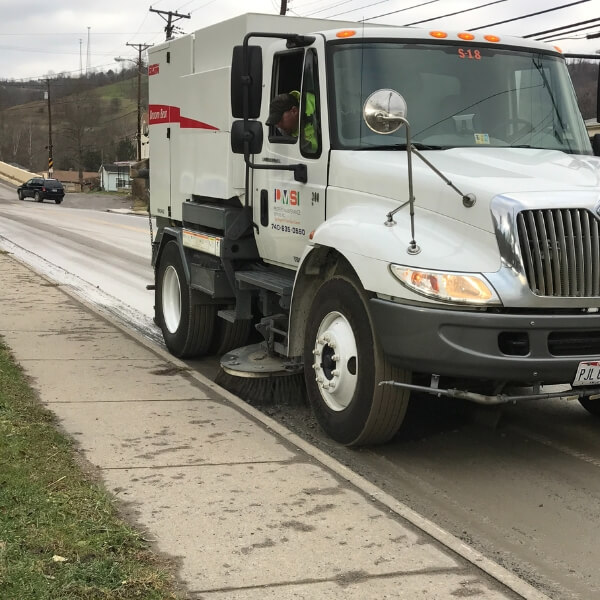
Street sweeping plays an important role in spring property maintenance because it removes debris before it creates larger problems. When mud, gravel, leaves, and litter are cleared from the surface, they are less likely to collect around curbs, drains, and entrances.
This helps improve the appearance of roads and parking lots while also supporting better drainage and a cleaner overall property.
For townships, municipalities, and commercial properties, street sweeping is one of the most practical ways to stay ahead of seasonal buildup.
Ohio Valley Weather Makes Spring Cleanup More Important
The Ohio Valley experiences a mix of heavy rain, changing temperatures, flooding concerns, and saturated soil throughout the spring. These conditions make debris buildup harder to ignore.
What may seem like a minor surface issue can quickly turn into a larger maintenance problem when repeated storms keep moving material across paved areas.
That is why spring cleanup should be treated as part of a broader seasonal maintenance plan rather than a last-minute response after conditions worsen.
Why Spring Property Maintenance Matters
Spring property maintenance is about more than keeping surfaces looking clean. It also helps reduce buildup, support drainage, and improve how roads, lots, and public areas function during a wet and unpredictable season.
When properties stay ahead of rain and debris, they are often easier to maintain throughout the rest of the year.
For Ohio Valley townships, municipalities, and commercial properties, that makes spring maintenance a smart investment.
Get Ahead of Spring Buildup
Spring conditions can create bigger problems when debris is allowed to collect on roads, parking lots, and public spaces. Staying ahead of that buildup helps properties remain cleaner, more functional, and better prepared for wet weather.
For seasonal property maintenance updates and service insight across the Ohio Valley, follow PMSI online or check back here for more tips and resources.
Comments are closed